When Should a Fabrication Shop Automate Welding?
News Details
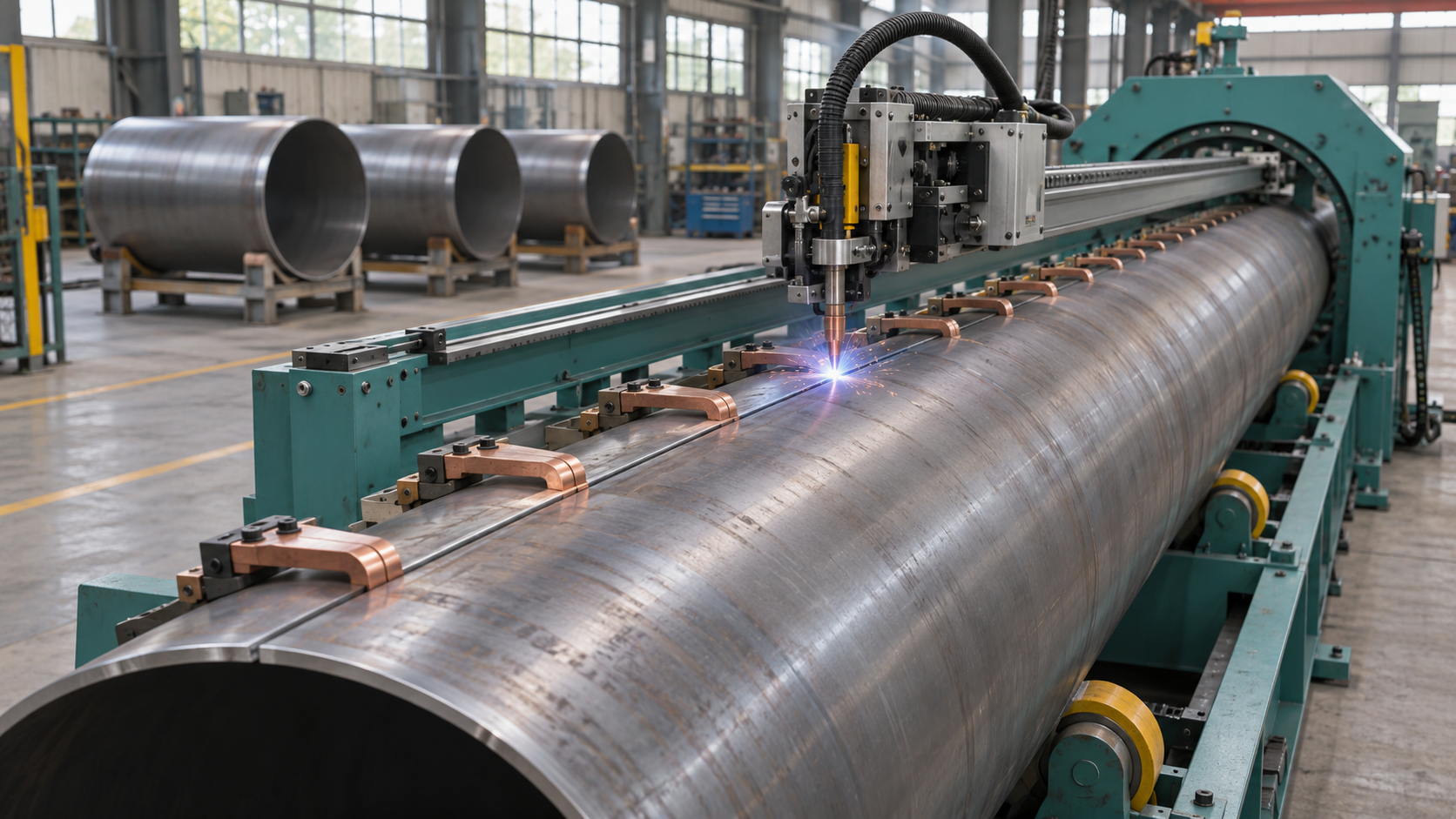
A fabrication shop should consider automating a weld when the same joint comes through the shop often, the parts fit together consistently, and welding limits how much finished work the shop can ship. The best time to buy is when a trial on your own parts shows that the savings can cover the installed cost within your target payback period.
Start with one question on the shop floor. When a batch runs late, are parts waiting for a welder, or is the welder waiting for parts? The answer tells you where to invest first.
Is a welding labor shortage holding up orders?
Suppose your most experienced welder spends each morning making the same straight seam on rolled shells. Meanwhile, custom assemblies wait because only that welder can fit and weld them. In this case, automating the shell seam could free skilled time for the orders that are hardest to staff.
Check that idea against a normal week of production. Record how many weld-ready parts queue up, how much overtime the team works, and which orders ship late. If the welding station often sits idle while parts wait for cutting, rolling, or fit-up, address that delay first. A faster weld will do little for the ship date.
Which weld should a fabrication shop automate first?
Look for a family of parts that share a joint shape and can use the same fixture with little adjustment. For example, several shell lengths may share the same straight seam. Together, those orders may keep a machine busy even if no single part number runs every day.
Fit-up matters because an automated torch follows a set path. If the joint shifts in the fixture or the gap varies along the seam, repeatable torch motion alone cannot ensure a sound weld. Ask the team to compare parts from different batches and identify how often a welder has to adjust by hand.
Match the equipment to that task. For straight butt joints in plate, Juchuang offers its JPB series longitudinal seam welding machine. For long seams on large pipes or vessel shells, its JCJS and JSL series manipulators support the welding head for internal or external welds. Explore Juchuang’s plate butt and longitudinal seam welding machines.
What belongs in the welding automationcost estimate?
Ask for the cost to produce an accepted part on your floor. Separate the budget into three groups so quotes are easier to compare.
| Cost group | What to include |
| Installed cost | Machine, fixtures, controls, guarding, freight, installation, and training |
| Start-up cost | Trial material, setup time, inspection, and production time lost during the changeover |
| Running cost | Operator time, power, gas, wire, replacement parts, and maintenance |
Then time a complete batch. Start when the operator sets up the fixture and stop when the last part passes inspection. Divide the total time by the number of accepted parts. This captures a cost that a fast demonstration can hide. On a short run, loading and changeover may take longer than welding.
How do you calculate welding automation ROI?
Consider an illustrative shop with an installed and start-up cost of $90,000. It expects to avoid $30,000 in overtime and $12,000 in rework each year. Added running costs come to $6,000 per year.
| Measure | Calculation | Result |
| Annual net savings | $30,000 + $12,000 − $6,000 | $36,000 |
| Simple payback | $90,000 ÷ $36,000 | 2.5 years |
| Three-year simple ROI | (3 × $36,000 − $90,000) ÷ $90,000 | 20% |
Use savings your shop can actually capture. If a reassigned welder stays on payroll, count avoided overtime or the margin from extra orders you can fill. Counting the welder’s full wage as well would overstate the return. Also test a quieter year. If annual net savings fall to $24,000, payback stretches to 3.75 years.
What should you prove in a welding trial?
Send Juchuang a joint drawing, material grade, thickness range, batch size, and samples that reflect normal fit-up variation. Agree on the weld acceptance criteria before the trial. Then ask the operator to run a full batch and switch to a second part size while your team records setup time, operator time, and how many parts pass inspection the first time.
Move ahead when the trial meets your quality target, reduces the bottleneck, and delivers an acceptable payback at a realistic order volume. If the result depends on perfect samples or nonstop production, revisit the fixture or choose a different weld for the first project.


