Welding Manipulator Selection Guide: Reach, Load, Travel and Integration
News Details
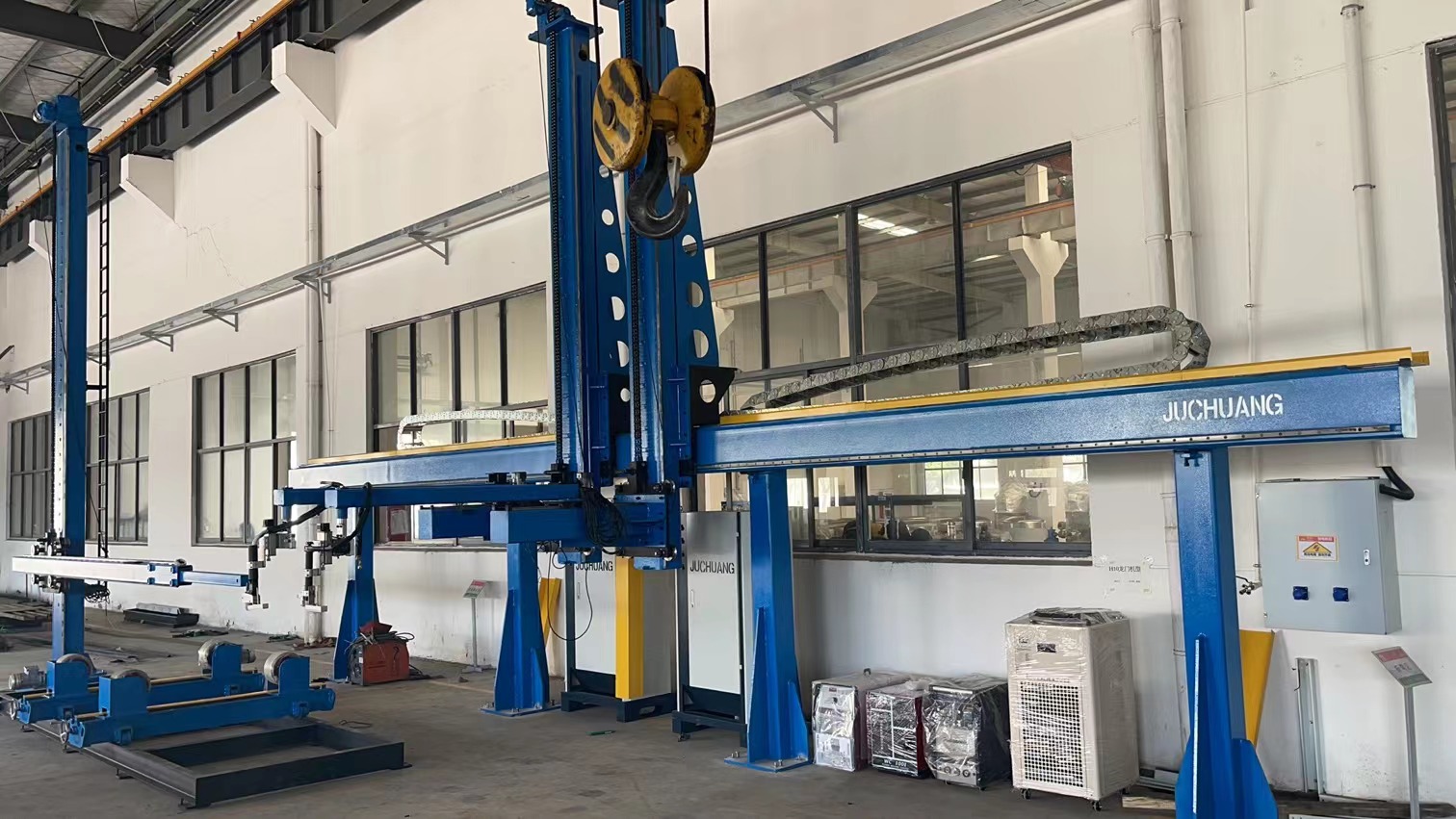
Automating thick-walled tank fabrication, vessel manufacturing, and heavy pipe spooling requires precise equipment choices. A welding manipulator—commonly known as a welding column and boom—enables steady torch placement and continuous welding over long, demanding seams. Choosing the correct model keeps your weld seams clean, boosts throughput, and improves shop safety.
However, picking the ideal machine means looking past basic dimensions. You must evaluate vertical and horizontal reach, tip payload, travel mobility, and joint system controls. In this guide, we break down the critical factors to consider when upgrading your production line.
1. Reach and Stroke: Sizing the Column and Boom
First, determine the overall working envelope your torch must cover. A column-and-boom setup features a vertical column and a horizontal arm that extends, retracts, and lifts.
-
Vertical Travel: Ensure the boom lifts high enough to clear your largest workpiece diameter, including the height of your support fixtures. Also, verify that the torch lowers far enough to weld low-profile seams or internal vessel bottoms.
-
Horizontal Extension: Measure the maximum length of your longitudinal seams. The boom must extend smoothly across the entire seam length without bending or vibrating.
For tight spaces or deep internal welds, specialized telescoping booms allow long reaches without demanding excess building clearance behind the unit.
2. Load Capacity: Weight and Tooling at the Boom Tip
Next, review total weight requirements at the end of the boom. Every welding manipulator has a maximum tip load rating. Exceeding this rating causes deflection, which leads to poor seam tracking and premature wear.
When calculating total tip payload, account for all mounted equipment:
-
SAW (submerged arc), MIG, or TIG welding torches and wire feeders
-
Heavy sub-arc flux hoppers and recovery systems
-
Cross-slides, seam-tracking sensors, and motorized laser vision systems
-
Video cameras and operator control boxes
Always select a machine rated above your estimated tool weight. Extra load headroom reduces mechanical vibration and extends guide-rail life.
3. Travel Speed and Mounting Mobility
Furthermore, consider how your manipulator moves across your shop floor. Base configurations dictate workflow flexibility:
Fixed Base
Screwed directly into the concrete floor, a fixed base provides maximum stability for centralized welding stations. Many fixed models offer 360-degree column rotation to serve multiple workstations in a circle.
Travel Trolley
Mounted on floor rails, a motorized trolley moves the entire manipulator alongside long workpieces. Precise variable-frequency drive controls ensure smooth travel speeds during continuous longitudinal welds.
4. System Integration: Work-Holding and Joint Controls
For high-quality circumferential welds, a column and boom rarely works alone. It must synchronize smoothly with auxiliary work-holding machinery:
-
Turning Rolls: When welding round vessels or pipes, power-driven turning rolls rotate the workpiece at a steady surface speed while the manipulator torch remains stationary.
-
Welding Positioner: For complex sub-assemblies, a tilt-rotate welding positioner places the seam into a flat down-hand orientation while the manipulator holds the torch steady.
Synchronized PLC Control
A unified control system is vital. Using a single central interface lets the operator start the manipulator, seam tracker, power source, and turning rolls simultaneously. This eliminates manual speed matching, reduces setup delays, and prevents joint defects.
Why Partner with a Custom Welding System Integrator?
Off-the-shelf equipment does not always match unique factory layouts or challenging workpiece geometries. Working with an experienced custom welding machine manufacturer ensures your column and boom system meets exact reach, weight, and process requirements.
As a leading welding system integrator China, JuChuang WeldTech engineers turn-key automated solutions tailored to your production demands. From heavy-duty column and boom units to integrated rotators, positioners, and seam tracking technology, our team delivers reliable machinery built to maximize efficiency and weld quality.
Contact JC WeldTech today to speak with an automation specialist and find the right welding setup for your shop floor.


