
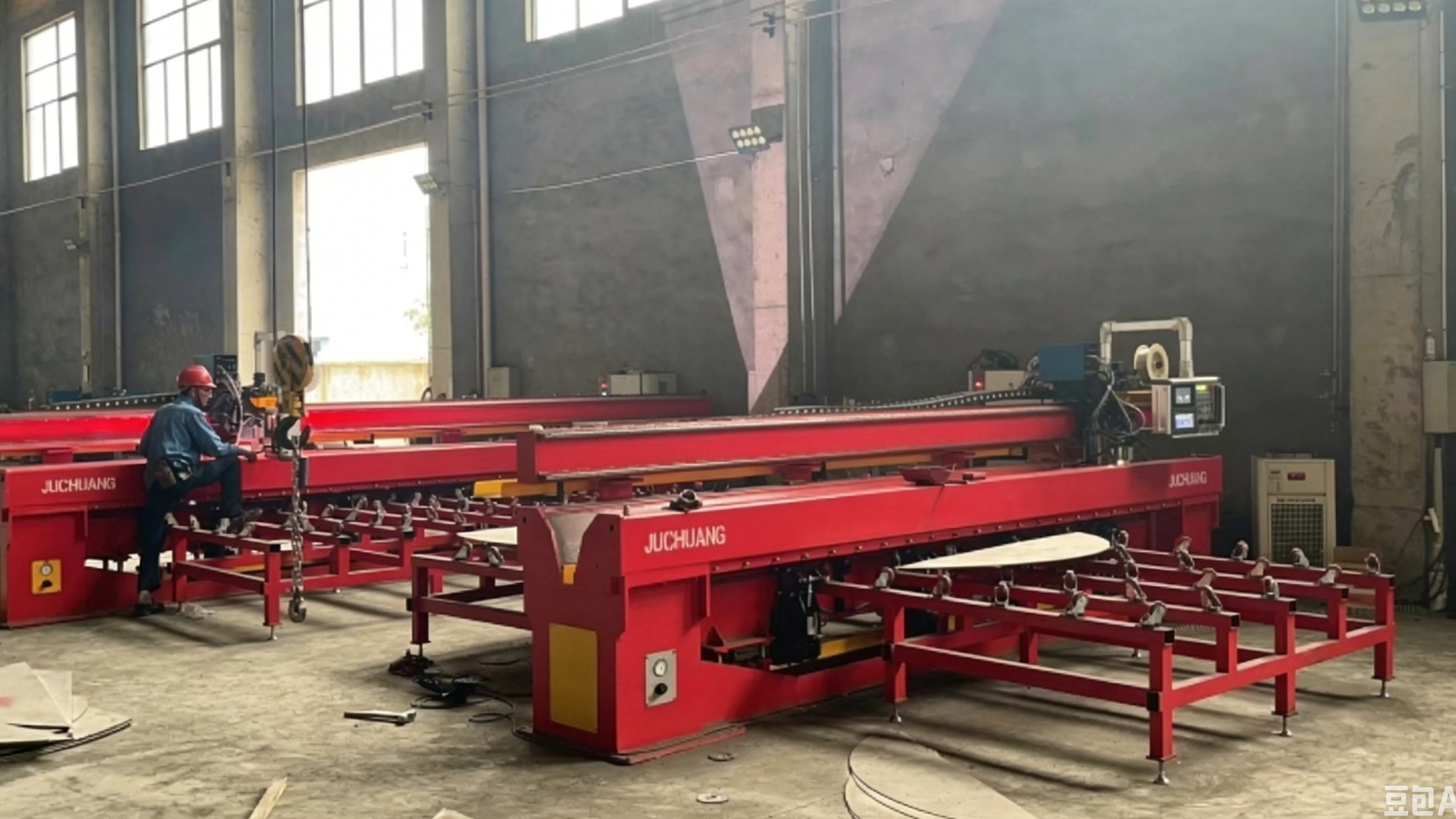
The modern heavy manufacturing sector faces serious challenges today. Industrial facilities constantly struggle with rising labor costs, a severe shortage of skilled welding operators, and tight production deadlines. Because of these market pressures, traditional manual welding is often no longer enough to keep up. Manual processes frequently lead to structural defects, material distortion, and costly rework on the shop floor.
To stay competitive, forward-thinking businesses are turning to automated machinery. Implementing a modern automatic welding workstation is the single most effective way to eliminate bottlenecks, reduce scrap rates, and dramatically increase your daily production capacity.
Flexible Configurations Adapt to Diverse Materials
To truly boost factory output, automated machinery must be versatile enough to handle multiple types of industrial metals. Investing in a highly rigid system that only processes one material can limit your factory’s agility when new client orders arrive.
The automated plate butt welding series excels in wide material compatibility. This specialized tooling series is engineered specifically for the flat butt welding of diverse materials, including:
-
Stainless steel
-
Aluminum alloys
-
Carbon steel
-
Titanium alloys
-
Non-ferrous metals
Whether your facility handles standard structural frames or high-end chemical tanks, a single automated workstation can process these varying metals seamlessly.
Mastering Varying Plate Thicknesses and Multiple Processes
Another major bottleneck in manual welding is managing varying plate thicknesses. Thick plates require extensive joint preparation and slow, careful heat management to prevent structural cracking.
This automated plate butt welding system is built to handle standard plate thicknesses between 3mm and 10mm. However, its true power lies in its advanced handling of heavy-duty components. When the metal plates undergo edge beveling or edge milling, the system's effective clamping thickness can safely reach up to 12mm. For heavy workpieces that are thicker than 10mm, operators can open a bevel joint and utilize a multi-pass welding strategy. This allows the system to firmly clamp and weld materials up to 12mm thick with total precision.
Furthermore, the machine integrates easily with multiple high-efficiency welding processes to match your specific production standards. Depending on your project requirements, you can configure the system for:
-
Plasma Arc Welding (PAW)
-
Tungsten Inert Gas (TIG) Welding
-
Plasma + TIG Hybrid Welding
-
MIG/MAG Gas Shielded Welding
Evaluating Technical Parameters Across the Equipment Lineup
To help your engineering team choose the correct machinery setup, the core product line features five distinct model footprints designed to match different facility needs: HP3000, HP5500, HP6000, HP8000, and HP10000.
-
Maximum Effective Welding Length: The production length starts at 2600mm on the compact HP3000 model, scaling up to 5000mm on the HP5500, 5600mm on the HP6000, 7600mm on the HP8000, and reaching a maximum capacity of 9800mm on the heavy-duty HP10000 workstation.
-
Weldable Plate Thickness Window: The entry-level HP3000 handles thin-to-medium plates ranging from 1.5mm to 8mm. Meanwhile, the HP5500, HP6000, and HP10000 configurations easily accommodate a wide thickness range from 3.0mm to 12mm, while the HP8000 supports thicknesses from 4.0mm to 12mm.
-
Heavy-Duty Clamping Force: Every single model in this machinery lineup features a rigid piano-key clamping mechanism that delivers a uniform single-side force of 30kg/cm. This locks the plates tightly against the backing pad to eliminate joint displacement and warping during intense arc heating.
-
Adjustable Clamping Finger Clearance: The spatial distance between the clamping fingers can be precisely adjusted from 10mm to 40mm across all five models, giving operators complete control over custom weld bead profiles.
-
High-Speed Travel Carriage: The automated carriage features a fully variable travel speed ranging from 65 to 1250mm/min, eliminating human physical fatigue and ensuring perfectly uniform weld tracks.
-
Vertical Backing Adjustment: To align plates of different thicknesses rapidly, the backing mechanism offers a 0 to 60mm vertical adjustment stroke. This system is operated manually on the HP3000 and HP5500 models, and is upgraded to a fully motorized electric setup on the HP6000, HP8000, and HP10000 models.
Proven B2B Solutions: A Real-World Success Story
To understand how these automated technical parameters directly translate into higher factory output, let us look at an industrial solution engineered by Jiangsu Juchuang Automation Technology Co., Ltd..
An international industrial automation integrator in South Korea needed an efficient automated workstation to manufacture cooling liquid flow monitoring components. The project required high-volume production with zero defects. However, their existing manual welding line was far too slow, suffered from high reject rates, and created a severe bottleneck on their factory floor.
Juchuang evaluated these strict geometry, thickness, and material constraints. To solve the client's bottleneck, we designed and integrated a custom automated welding system featuring a high-precision multi-axis arm, an intelligent program control unit, and custom quick-change pneumatic fixtures.
The Success Outcomes:
-
Significant Cost Reduction: By replacing slow manual tasks with Juchuang's continuous automated workstation, the factory successfully lowered its overall maintenance and operational costs.
-
Flawless Quality and High Precision: The smooth, vibration-free movement paths of the integrated system eliminated human error entirely, producing beautiful, high-reproducibility welds that cleared all quality inspections.
-
Massive Production Scale-Up: The automated workstation allowed the manufacturer to complete and deliver a high-volume batch of 1,200 units to their end-users well ahead of schedule, proving the total reliability of Juchuang's tailored machinery.
Conclusion: Upgrade Your Production Line with Juchuang
Ultimately, boosting your factory output requires moving away from manual dependencies and investing in rigid, smart, and fully adjustable automated machinery. By deploying a system that provides robust plate clamping, single-pass full penetration, and variable carriage speeds, you can eliminate weld defects, save on expensive consumables, and maximize daily workshop throughput.
Operating from its state-of-the-art manufacturing headquarters in Changzhou City, Jiangsu Province, Juchuang Automation is a trusted high-tech designer of automated welding systems. We serve global clients across the energy, chemical processing, pressure vessel, and construction machinery sectors. Our team operates under a strict business philosophy: "Technology as the Root, Quality as the Foundation."
We understand that standard machinery does not always fit your unique factory floor layout or product specifications. Therefore, our engineering team specializes in non-standard customizations, allowing us to modify effective travel lengths, integrate advanced laser tracking sensors, or engineer specialized multi-torch assemblies to meet your precise target goals.
Stop losing time to manual rework and labor shortages. Contact our international trade department today to discuss your production goals, request a technical configuration analysis, or receive a detailed engineering proposal for your facility.
-
Company Name: Jiangsu Juchuang Automation Technology Co., Ltd.
-
Official Website:https://www.jcweldtech.com/
-
Corporate Email: JCKJWELD@SINA.COM
-
Contact Number / WhatsApp: +86-189-1583-5369


