
The shell and tube heat exchanger industry faces strict quality and speed requirements today. Fabricating these units requires welding hundreds or even thousands of small tubes onto a single thick plate. Because of these numbers, relying on manual labor often leads to joint defects, slow cycle times, and a severe bottleneck on your shop floor.
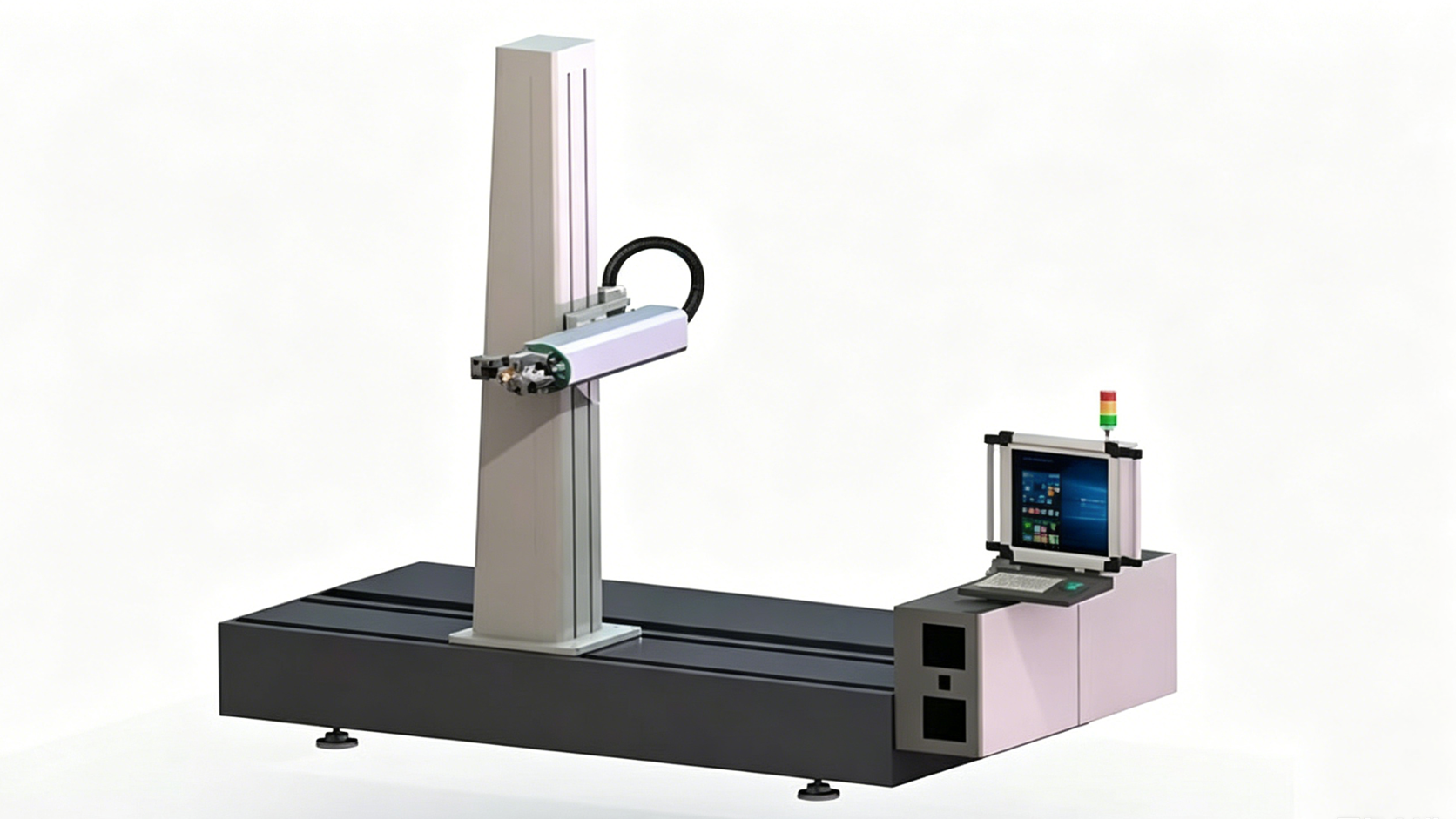
To overcome these manufacturing hurdles, investing in specialized industrial welding automation is the most reliable strategy. Specifically, implementing an advanced system like the TPR-2000 Robotic Tube-to-Tube Sheet Automatic Welding System allows factories to bypass manual dependencies and significantly step up their production capacity.
1. Advanced 3D Laser Tracking Guides the Torch Automatically
In traditional manufacturing workshops, manual tube sheet welding requires intense operator focus. Operators must physically align the torch head with every single tube hole, which is time-consuming and prone to human error.
The TPR-2000 completely changes this workflow by introducing advanced 3D Cross-Laser Identification and Positioning Technology.
-
The Core Mechanism: The system projects a cross-laser beam directly onto the tube hole. Using the principles of laser triangulation, an integrated sensor captures high-resolution images of the joint.
-
Real-Time Data Processing: The built-in software instantly processes these images to build a precise 3D point cloud of the target area. Within just 15 milliseconds, it calculates the absolute spatial coordinates (X, Y, Z) of the tube hole center, wall thickness, protrusion length, and plate flatness.
-
Rapid Positioning: Once the data is captured, the system automatically charts the optimal robot path. It moves from initial visual identification to absolute torch positioning in under 6 seconds, running continuously without any manual intervention.
2. Smart Software Eliminates Error on Imperfect Plates
Real-world industrial workpieces are rarely flawless. For instance, metal plates can suffer from minor tolerances during machining, or look slightly deformed after tack-welding cycles. If an automated machine blindly follows a static program, it will miss the joint track entirely.
To prevent this issue, the TPR-2000 control software features unique multi-fitting calculations. The software evaluates the validity of every single data point it collects. If it detects an error or an out-of-tolerance tube hole, it automatically flags the problem, skips the defective hole, and marks it clearly on the human-machine interface screen.
Furthermore, this laser-guided system is highly stable. It is not affected by surface rust, pre-heating thermal zones, variations in ambient factory lighting, or changing weather conditions. For complex heavy-duty components that require multi-layer welding, the laser sensor rescans the joint before every single layer. This ensures the torch maintains an optimal path, completely unaffected by the shape of the previous weld bead.
3. High-Performance Hardware Built for Heavy Industrial Use
The entire hardware network of the TPR-2000 workstation is built to deliver continuous, high-speed performance across demanding shift rotations. The system breaks down into several interconnected technical sub-systems:
Automatic Base and Precise Robot Motion
The workstation features an automatic electric chassis that rapidly adjusts the physical distance between the robot arm and the workpiece, locking itself into place automatically. The motion axes of the three-axis welding robot combine high-torque servo motors with rugged planetary gear reducers. Driven by precision ball screws, these axes deliver rapid travel speeds and high spatial accuracy.
Tangle-Free Orbital Torch Head
The machine utilizes a specialized PT60 Automatic Tube Sheet Welding Head. It features an infinite-rotation design that prevents cable wrapping, meaning the torch can spin around the tube indefinitely without binding lines. It also includes front-mounted wire feeding and Arc Voltage Control (AVC) technology, which automatically adjusts the torch height in real time to keep the voltage uniform.
Fully Integrated Smart Controls
The workstation runs on the Di-Ctrl Intelligent Control System, which links the industrial computer, PLC, digital power source, and water cooling tank through a high-speed Ethernet bus using standard TCP/IP communication protocols. The system also includes smart built-in alarms to maximize runtime:
-
Tungsten Electrode Life Reminders: The software tracks electrode wear. Once the limit is reached, it moves the torch to a safe zone and triggers a sound and light alarm before the next weld begins.
-
Filler Wire Consumption Monitoring: If the system detects that the filler wire is running low, it automatically pauses, retreats safely, and alerts the operator for a quick swap.
4. Technical Specifications and Application Limits
The TPR-2000 is highly versatile, making it an ideal choice for the competitive column-and-tube heat exchanger manufacturing industry. Its application boundaries include:
-
Weld Joint Configurations: Supports flat-flush tubes (extending 0.5 to 1mm), protruding tubes (extending 3 to 6mm), and recessed tubes (retracted up to 2mm).
-
Material Versatility: Processes carbon steel, stainless steel, titanium alloys, and other premium industrial metals.
-
Tube Diameter Capacity: Accommodates tube diameters ranging from 16mm to 60mm.
-
Total Working Range: Covers a wide operational envelope of up to 2,000mm.
-
Welding Discipline: Executes high-precision full-position pulsed TIG welding, supporting both autogenous fusing and filler-wire setups.
Juchuang’s Proven Automation Solutions: A Client Case Study
To see how these advanced automated systems perform in a real manufacturing facility, let us look at a custom solution engineered by Jiangsu Juchuang Automation Technology Co., Ltd..
An international manufacturer faced a massive production bottleneck when building high-purity fluid processing vessels. The internal weld roots of their stainless steel tubes had to pass strict non-destructive testing (NDT), requiring flat, oxide-free surfaces to prevent bacterial contamination. Because their existing manual welding line was far too slow and suffered from high reject rates, they were unable to meet their growing commercial contract deadlines.
Juchuang evaluated these strict geometry, thickness, and material constraints. To solve the client's bottleneck, we delivered a customized automatic tube-to-tube sheet station utilizing our core laser vision tracking and high-purity argon shielding technologies.
The Project Outcomes:
-
Flawless Quality on the First Pass: The automated system maintained an absolute gas barrier during the pulsed TIG cycle, producing clean, oxide-free weld roots that cleared strict inspections on the very first try.
-
Process Simplification: The continuous, vibration-free tracking of the automated torch allowed the facility to achieve deep, clean penetration in a single pass, completely eliminating the need for slow multi-layer manual stick welding.
-
Massive Output Scale-Up: By replacing manual tasks with the automated cycle, the factory successfully completed a high-volume run of 500 units well ahead of schedule, drastically lowering their overall manufacturing overhead.
Simple Operating Workflow for Factory Personnel
Maintaining and operating the TPR-2000 system does not require a complex programming background; the daily process is straightforward and user-friendly:
-
CAD Import & Planning: The operator imports the product's CAD drawings directly into the system. They can use simple zone selection tools or automated sequences to plan the welding order in minutes.
-
Initial Scanning: After setting the pre-saved welding parameters, the operator guides the laser sensor to scan the initial starting hole to establish the workpiece coordinate system.
-
Automated Execution: The operator presses start. The 3D cross-laser sensor follows the planned path, identifies the tube holes, maps out the robot's real-time motion paths, and executes high-reproducibility welds line by line.
-
Completion: Once all tubes within the 2,000mm range are welded, the robot arm automatically retreats to a safe resting position and emits a sound and light alarm to signal the operator.
Conclusion: Upgrade Your Production Line with Juchuang
Ultimately, boosting your factory output requires moving away from manual dependencies and investing in rigid, smart, and fully adjustable automated machinery. By deploying a system that provides robust laser tracking, automated arc voltage control, and smart diagnostic monitoring, you can eliminate weld defects, save on expensive consumables, and maximize daily workshop throughput.
Operating from its advanced manufacturing headquarters in Changzhou City, Jiangsu Province, Juchuang Automation is a trusted high-tech designer of automated welding systems. We serve global clients across the energy, chemical processing, pressure vessel, and construction machinery sectors. Our team operates under a strict business philosophy: "Technology as the Root, Quality as the Foundation."
We understand that standard machinery does not always fit your unique factory floor layout or product specifications. Therefore, our engineering team specializes in non-standard customizations, allowing us to modify effective travel lengths, integrate advanced laser tracking sensors, or engineer specialized multi-torch assemblies to meet your precise target goals.
Stop losing time to manual rework and labor shortages. Contact our international trade department today to discuss your production goals, request a technical configuration analysis, or receive a detailed engineering proposal for your facility.
-
Company Name: Jiangsu Juchuang Automation Technology Co., Ltd.
-
Official Website:https://www.jcweldtech.com/
-
Corporate Email: JCKJWELD@SINA.COM
-
Contact Number / WhatsApp: +86-189-1583-5369


