
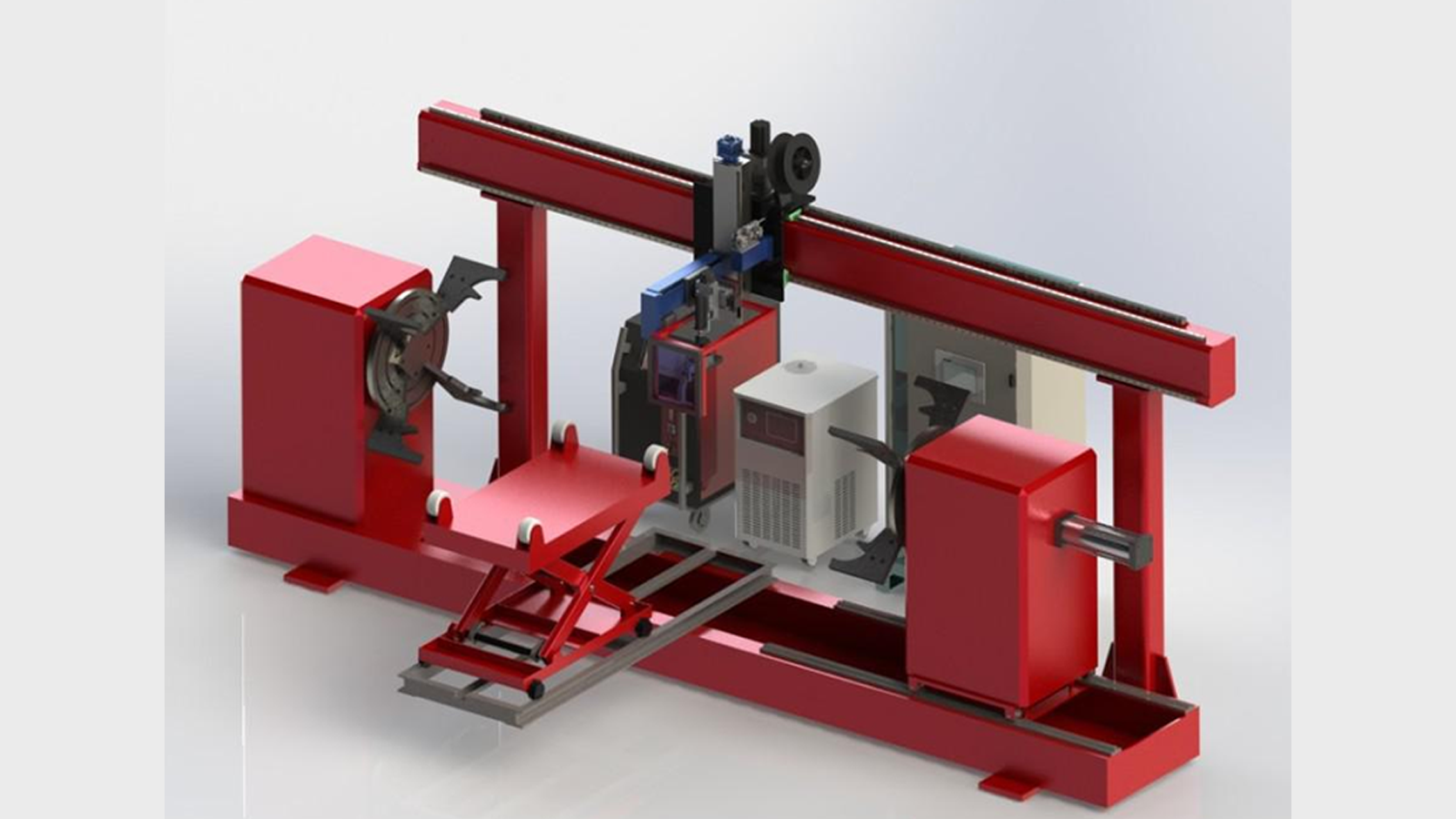
Welding is one of the most important thermal processing technologies in modern manufacturing. In many ways, the development level of welding technology reflects the overall strength of a country’s machinery and industrial production.
Today, more manufacturers are turning to automated welding systems to improve production efficiency and product quality. Among these systems, welding robots have become a key part of modern industrial automation. They combine technologies from computers, electronics, sensors, and intelligent control systems to complete stable and accurate welding tasks.
Compared with manual welding, robotic welding offers higher consistency, faster production speed, and safer working conditions. In addition, welding robots can work continuously for 24 hours, helping factories reduce labor costs and improve production capacity.
However, a complete robotic welding system is much more than just a robot arm. It also requires several important supporting devices to ensure stable and efficient operation.
This article explains the main components of a welding robot system and shows how companies can benefit from advanced robotic welding solutions from Juchuang.
Why Welding Robots Are Becoming More Popular
In recent years, manufacturers in industries such as automotive, metal fabrication, construction machinery, and pressure vessel production have faced increasing pressure to improve efficiency while maintaining product quality.
At the same time, skilled welders are becoming harder to find. Manual welding also creates challenges such as inconsistent weld quality, operator fatigue, and harsh working environments.
As a result, many companies are upgrading their production lines with robotic welding systems.
Welding robots can:
- Improve welding consistency
- Reduce production errors
- Lower labor costs
- Increase production speed
- Minimize material waste
- Improve workplace safety
- Support large-scale manufacturing
Because of these advantages, robotic welding has become an important part of smart manufacturing and industrial automation.
Main Components of a Welding Robot System
A standard arc welding robot system usually includes the following major parts.
1. Robot Body
The robot body is the core part of the entire welding system.
Most industrial welding robots use a six-axis articulated robot structure. These robots are powered by servo motors and include several important mechanical components, such as:
- Mechanical arms
- Joint structures
- Drive systems
- Transmission mechanisms
- Internal sensors
The robot arm moves the welding torch to the correct position and angle during operation. At the same time, the control system ensures accurate motion and repeatability.
Functions of the Six Axes
Most welding robots around the world use six axes because this structure provides excellent flexibility.
- Axes 1, 2, and 3 control the position of the welding torch in space
- Axes 4, 5, and 6 adjust the welding angle and orientation
This design allows the robot to complete complex welding tasks in different positions and directions.
For example, in automotive frame welding or pipe welding applications, the robot can maintain stable torch angles even in narrow or difficult spaces.
2. Robot Control System
The control system acts as the “brain” of the welding robot.
It controls the robot’s movement according to pre-set programs and welding paths. The controller coordinates every motion of the robot arm and ensures precise synchronization during welding operations.
The control system mainly includes:
- Industrial computer systems
- Electronic control units
- Motion control software
- Position feedback systems
- Communication modules
Modern welding robot controllers also support advanced technologies such as:
- Offline programming
- Path correction
- Real-time monitoring
- Intelligent fault diagnosis
- Remote operation
As production requirements continue to grow, intelligent control systems are becoming increasingly important for flexible manufacturing.
3. Power Source and Transmission System
The power source provides the energy required for robot movement and welding operations.
Depending on the application, welding robots usually use electric or hydraulic power systems.
This part of the system includes:
- Servo motors
- Drive units
- Reducers
- Transmission devices
- Cable systems
Stable power transmission is essential because it directly affects welding accuracy and motion stability.
High-quality servo systems help the robot achieve smoother movement, faster response speed, and better positioning accuracy.
For manufacturers producing high-volume products, stable motion control can greatly reduce welding defects and rework costs.
4. Welding Process Support System
The welding process support system is another critical part of robotic welding.
This section mainly includes:
- Welding power source
- Wire feeding system
- Gas supply system
- Welding torch
- Cooling system
These devices work together to ensure stable welding performance.
Welding Power Source
The welding power source directly affects weld quality. Different applications require different welding methods, such as:
- MIG welding
- MAG welding
- TIG welding
- Pulse welding
Modern robotic welding systems often use digital inverter welding power supplies because they provide stable arc control and high welding efficiency.
Wire Feeding System
The wire feeder delivers welding wire continuously during operation.
A stable wire feeding speed is important because inconsistent feeding can cause poor weld formation, spatter, or arc interruption.
Gas Supply System
Shielding gas protects the weld area from contamination during welding.
Different materials require different shielding gases. Proper gas control helps improve weld appearance and mechanical strength.
How Juchuang Helps Manufacturers Improve Welding Efficiency
As manufacturing automation continues to grow, many companies are looking for reliable robotic welding partners.
Juchuang provides professional robotic welding solutions for a wide range of industries. The company focuses on helping manufacturers improve productivity, reduce labor dependence, and achieve stable welding quality.
With years of experience in welding automation, Juchuang offers:
- Robotic welding workstations
- Automated welding systems
- Customized welding solutions
- Intelligent welding integration
- Technical support and system optimization
Juchuang solutions are widely used in industries such as:
- Automotive parts manufacturing
- Metal furniture production
- Construction machinery
- Hardware fabrication
- Steel structure processing
Customer Case: Improving Production Efficiency with Juchuang Welding Robots
A metal fabrication company faced several challenges in its production workshop:
- Inconsistent manual welding quality
- Low production efficiency
- High labor costs
- Difficulty recruiting experienced welders
The company decided to upgrade its production line using a robotic welding solution from Juchuang.
After analyzing the customer’s production requirements, Juchuang provided a customized robotic welding workstation equipped with:
- Six-axis welding robot
- Intelligent welding controller
- Digital welding power source
- Automatic wire feeding system
- Positioning fixture system
After installation, the customer achieved several improvements:
- Welding efficiency increased significantly
- Weld consistency improved
- Product defect rate decreased
- Labor intensity was reduced
- Production capacity became more stable
The customer also reported that the robotic system could operate continuously for long production cycles, helping the company meet growing market demand.
Advantages of Robotic Welding for Modern Manufacturing
As industrial competition becomes stronger, companies need faster and more reliable production methods.
Robotic welding offers several long-term advantages.
Higher Welding Quality
Robots follow programmed welding paths with high precision. This helps reduce welding defects caused by human error.
Better Production Stability
Unlike manual operators, robots can maintain stable performance during long working hours.
Lower Production Costs
Although robotic systems require initial investment, they can reduce labor costs and improve production efficiency over time.
Safer Working Environment
Welding environments often include heat, smoke, and strong light. Robots help reduce worker exposure to dangerous conditions.
Flexible Automation
Modern robotic welding systems can adapt to different product types and production requirements.
Future Trends in Welding Robot Technology
The future of welding robots is moving toward smarter and more flexible automation.
New technologies such as artificial intelligence, machine vision, and digital monitoring are helping robotic welding systems become more intelligent.
Future welding robots may offer:
- Automatic weld tracking
- Adaptive welding control
- Real-time quality inspection
- Cloud-based production monitoring
- Collaborative robot applications
As Industry 4.0 continues to develop, robotic welding will play an even more important role in intelligent manufacturing.
Conclusion
Welding robots have become an essential part of modern industrial production. A complete robotic welding system includes the robot body, control system, power transmission system, and welding process support equipment.
Together, these components help manufacturers achieve higher efficiency, better weld quality, and safer production environments.
As more companies move toward automation, professional robotic welding solutions are becoming increasingly important. With advanced technology and industry experience, Juchuang continues to help manufacturers improve production performance through reliable and intelligent welding automation systems.


