What is Longitudinal Bowing in Welding? Causes and Solutions
News Details
When working with sheet metal and heavy plates, heat distortion can quickly turn a straight component into a curved mess. One of the most common forms of heat distortion is longitudinal bowing.
If you manufacture metal tubes, tanks, or structural beams, understanding how to prevent this bending is essential. In this guide, we will break down what longitudinal bowing is, why it happens along a longitudinal seam, and how to keep your parts perfectly straight.
What Is a Longitudinal Weld?
Before diving into bowing, it helps to answer a basic question: What is a longitudinal weld?
A longitudinal weld is a straight weld joint that runs along the length of a workpiece. For example, when a flat sheet of steel is rolled into a cylinder to make a pipe, the two long edges meet along the side. Joining those edges creates a long, straight longitudinal seam.
Because this seam extends across the entire length of the part, it absorbs a massive amount of heat during the welding process.
How Longitudinal Bowing Occurs
So, what exactly is longitudinal bowing?
Longitudinal bowing happens when a metal part bends or curves along its length after welding. This bending occurs because metal expands when heated and shrinks when it cools down.
Here is the step-by-step breakdown of how it happens:
-
Uneven Heating: During the welding process, the metal right around the joint gets extremely hot, while the rest of the plate stays relatively cool.
-
Metal Shrinkage: As the hot weld pool cools, the weld bead shrinks in length.
-
Pulling Force: Because the cooling weld bead tries to shorten itself while the surrounding cool metal resists, it pulls the ends of the workpiece upward or inward.
As a result, the flat or cylindrical workpiece arches into a bow shape, leading to fit-up issues during final assembly.
Factors That Increase Bowing Distortion
Several everyday shop factors can make longitudinal bowing much worse:
-
Excessive Heat Input: Using higher amperage or welding too slowly adds extra thermal energy, causing deeper shrinkage forces.
-
Off-Center Welds: Placing a seam far away from the neutral axis of a part causes uneven pulling forces, increasing the bow.
-
Thin Sheet Metal: Thinner materials have less structural rigidity, making them bow far more easily than thick steel plates.
-
Lack of Proper Clamping: Welding long seams without heavy-duty mechanical clamping allows the metal to move freely while hot.
How to Prevent Longitudinal Bowing
Fortunately, fabricators can take clear steps to minimize or eliminate bowing in their production lines.
1. Optimize Welding Parameters
First, lower your overall heat input. Using faster travel speeds or advanced pulsed-arc processes reduces the width of the heat-affected zone, which reduces shrinkage.
2. Balance the Welding Sequence
In addition, balance your heat distribution whenever possible. On symmetrical structures, welding opposite sides simultaneously cancels out opposing pulling forces.
3. Use Heavy-Duty Clamping Equipment
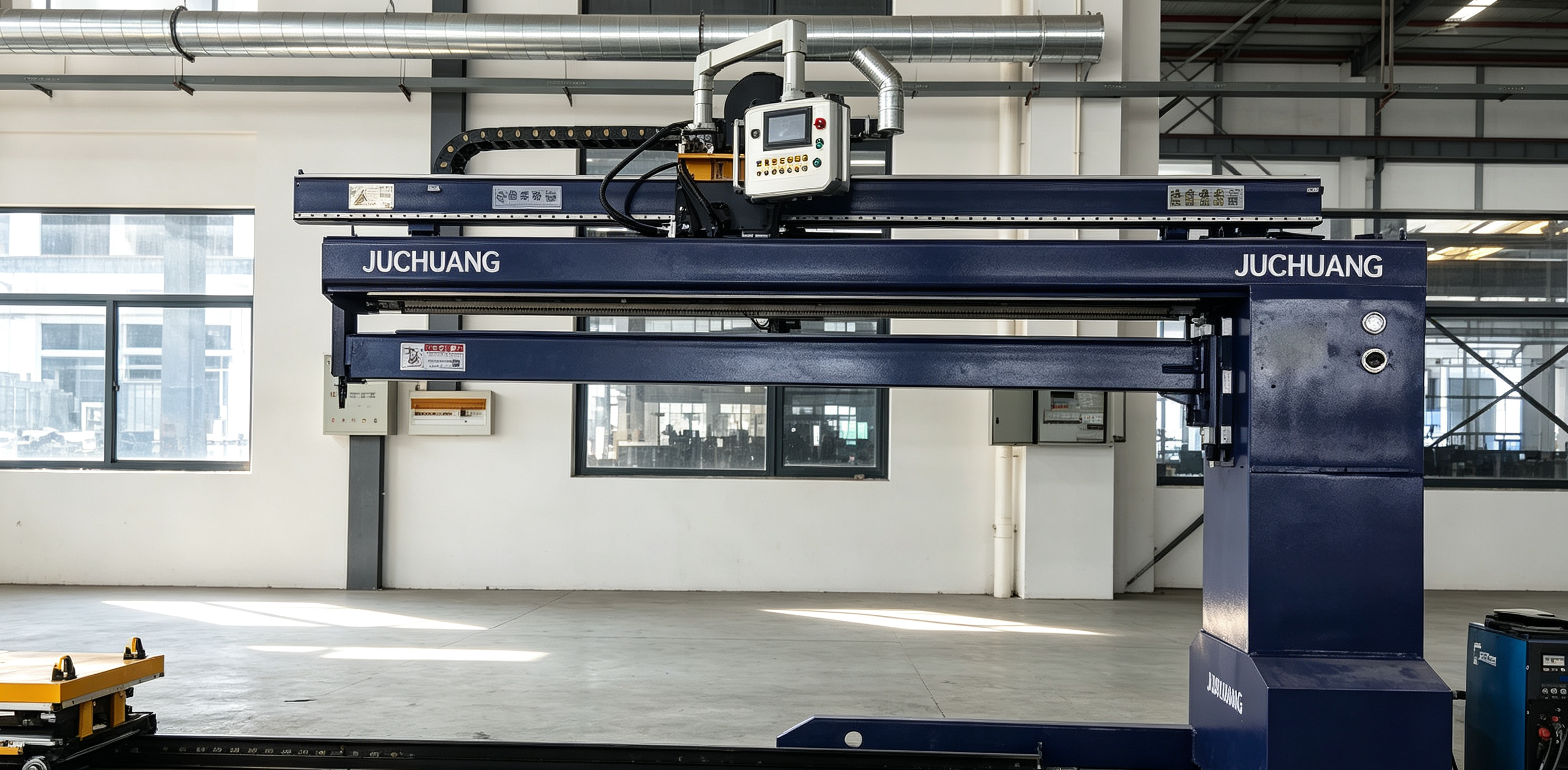
Most importantly, use specialized fixtures designed to absorb heat and hold the metal flat. A purpose-built seam welding machine uses copper chill bars and pneumatic finger clamps to hold the metal firmly along the entire seam. This setup draws heat away quickly and stops the joint from pulling out of shape.
Upgrading Your Shop with Automated Longitudinal Seam Welders
Manual welding over long straight joints makes heat control extremely difficult. Consequently, high-volume production facilities rely on automated longitudinal seam welders to guarantee straight, high-quality results.
An automated machine controls the torch speed with pinpoint accuracy. By maintaining a constant travel speed and uniform arc length, it ensures consistent heat input from start to finish—dramatically reducing the risk of bowing.
If you are looking to replace manual processes or scale your manufacturing capacity, exploring a high-performance longitudinal seam welder for sale from trusted experts like JCWeldtech can help you eliminate rework, boost throughput, and achieve flawless, distortion-free seams every time.


