
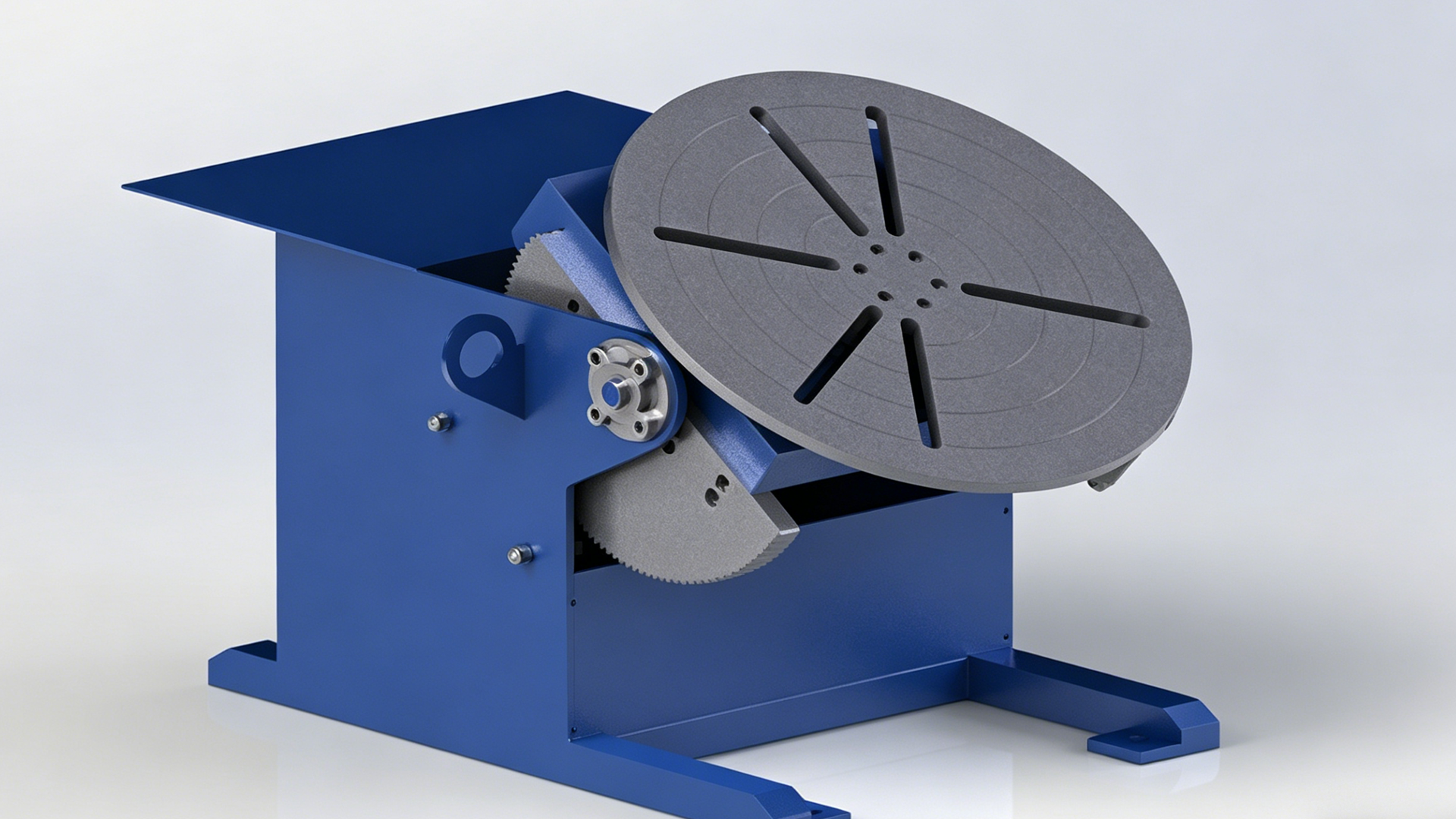
In recent years, the industrial sector has been moving quickly toward automation and robotics. This transformation is especially clear in the field of arc welding. Welding manipulators and welding robots are becoming key tools for modern production.
As technology continues to advance, manufacturers now expect higher quality, better consistency, and greater efficiency. Because of this, welding automation is no longer optional—it is becoming essential.
This article explains why welding manipulators are leading the future of welding automation and how they are used in real production environments.
Growing Need for Automated Welding
With the development of science and technology, welding requirements are becoming more demanding. Companies need:
- Fewer workers
- Higher product consistency
- Better weld quality
- More efficient large-scale production
At the same time, manual welding faces many limitations. It depends heavily on the skill level of workers. It is also affected by fatigue, attention, and physical limits.
Moreover, welding environments are often harsh. Workers are exposed to strong arc light, high heat, smoke, and spatter. As a result, fewer people are willing to work in welding roles, and skilled workers are becoming harder to find.
Because of these challenges, welding manipulators have become an important solution for modern factories.
Stable and Consistent Welding Quality
One of the biggest advantages of welding manipulators is stable welding quality.
In automated welding systems, key parameters such as current, voltage, welding speed, and wire extension remain constant. These factors have a direct impact on the final weld result.
When a welding manipulator is used, each weld is performed under the same conditions. This ensures uniform weld seams and consistent product quality.
In contrast, manual welding often leads to variation. Even experienced workers may produce different results due to fatigue or slight changes in movement.
For example, in a production project using Juchuang welding solutions, a manufacturer improved weld consistency after switching to automated systems. The variation between weld seams was reduced, and product quality became more stable.
Improved Working Environment
Another important benefit is a safer and more comfortable working environment.
With welding manipulators, workers do not need to stay close to the welding area. Instead, they focus on loading and unloading workpieces or monitoring the system.
This reduces exposure to:
- Bright arc light
- High temperatures
- Welding fumes
- Flying sparks and spatter
In addition, during spot welding, workers no longer need to carry heavy manual welding tools. This reduces physical strain and improves overall comfort.
As a result, welding manipulators help improve workplace safety and reduce labor intensity.
Higher Productivity and Continuous Operation
Welding manipulators also greatly improve productivity.
Unlike human workers, robots do not get tired. They can operate continuously for long hours, even 24 hours a day in many production lines.
In addition, modern welding technology allows faster welding speeds and more efficient processes. This leads to higher output in less time.
For instance, a factory using Juchuang welding automation systems upgraded from manual welding to robotic production. After the upgrade, production efficiency increased significantly, and continuous operation became possible with fewer interruptions.
Therefore, welding manipulators play a key role in improving production performance.
Clear Production Cycles and Easy Planning
Another advantage is predictable production scheduling.
Because welding manipulators follow programmed instructions, each operation takes a fixed amount of time. This makes it easier to plan production schedules and control output.
Manufacturers can benefit from:
- Clear production timelines
- Stable output levels
- Improved delivery accuracy
- Better resource management
As a result, companies can reduce uncertainty and improve overall operational efficiency.
Flexibility Compared to Dedicated Machines
Welding manipulators are also more flexible than traditional special-purpose machines.
They can adapt to different products by adjusting programs and fixtures. When product designs change, there is no need to replace the entire system.
Instead, manufacturers can:
- Update welding programs
- Adjust welding paths
- Modify fixtures
In a Juchuang application case, a factory producing various metal components used one welding robot system for multiple products. By changing fixtures and programs, they quickly switched production tasks.
This flexibility reduces equipment costs and supports modern production needs, especially for small-batch and customized manufacturing.
Juchuang Welding Solutions in Real Applications
In real industrial environments, welding manipulators deliver the best results when combined with complete system solutions.
Juchuang provides integrated welding automation systems that include robot configuration, welding parameter optimization, and production workflow design.
For example, a heavy equipment manufacturer faced issues such as low efficiency, inconsistent welding quality, and high labor costs. After adopting a Juchuang solution, the factory introduced:
- Welding manipulators with stable motion control
- Optimized welding parameters
- Standardized fixtures and positioning
- Integrated production processes
After the upgrade, the factory achieved better welding consistency, higher productivity, and more stable production.
At the same time, workers were moved away from harsh welding environments, improving overall working conditions.
Conclusion
Welding manipulators are becoming a key force in the future of welding automation.
They provide stable welding quality, improve working conditions, increase productivity, and support flexible production. In addition, they help manufacturers achieve more predictable and efficient operations.
With the support of advanced solutions like those from Juchuang, welding automation will continue to grow and play an even more important role in modern industry.
As technology continues to develop, welding manipulators will gradually replace more manual welding tasks and become a core part of smart manufacturing systems.


