


In high-stress metal forming, heavy-duty stamping, and advanced machining, conventional surface coatings often fail under extreme loads. While traditional Physical Vapor Deposition (PVD) hardfilms offer excellent surface hardness, they suffer from a critical vulnerability known as the "Eggshell Effect". When an ultra-hard but thin PVD coating is deposited directly onto a softer steel substrate, heavy localized forces deform the base metal underneath. This causes the top coating to crack, chip, and peel away like thin ice over mud, rendering the tool useless.
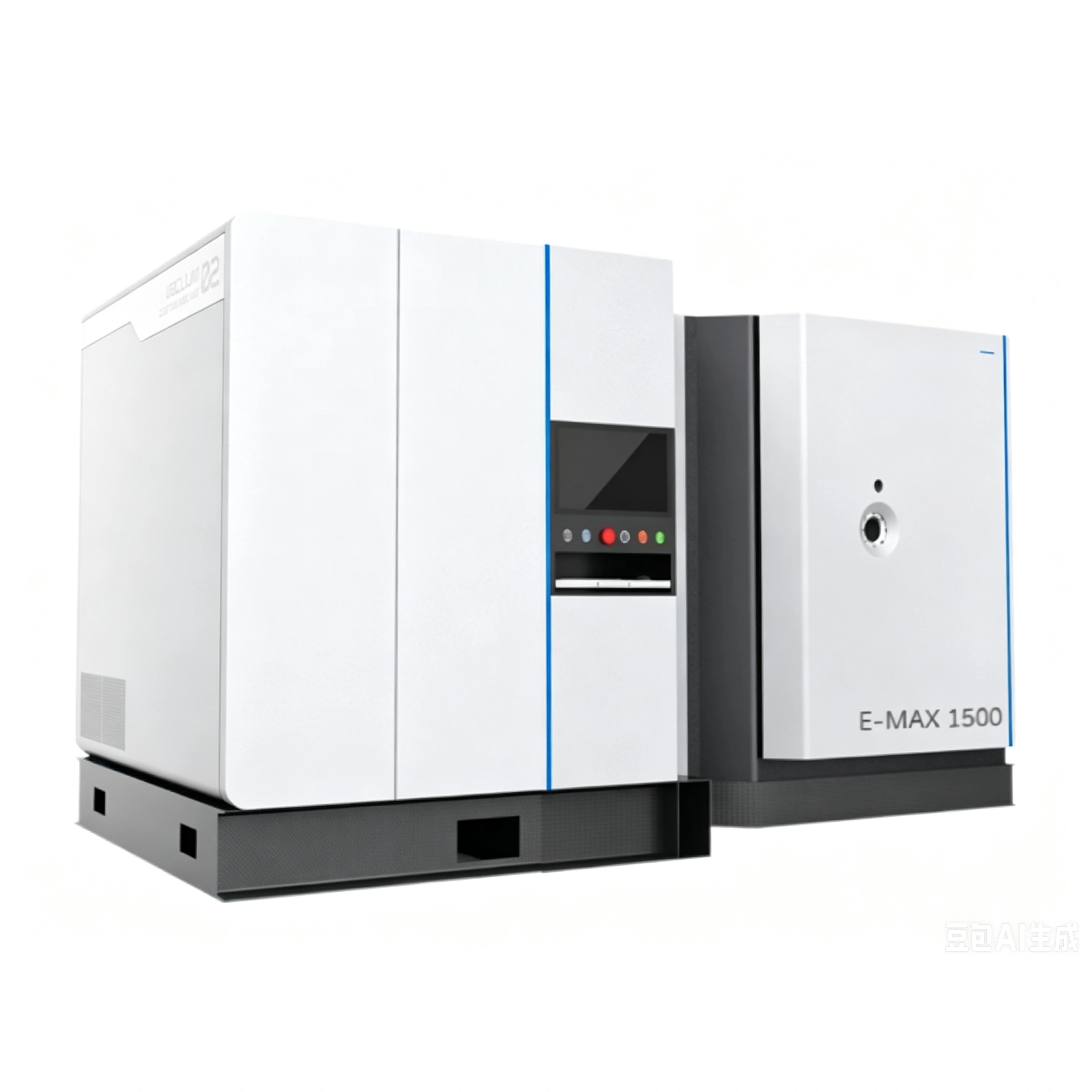
To eliminate this core failure point, Jiangsu Juchuang Automation Technology Co., Ltd. engineered the E-MAX+ Integrated Duplex Composite Coating Equipment. This flagship system represents a major leap forward in vacuum surface engineering, integrating high-frequency pulsed plasma nitriding and high-performance PVD/PACVD deposition into a single, continuous, in-situ process loop.
1. The Synergistic Strategy: "Nitriding First, then Coating"
The E-MAX+ system utilizes a revolutionary "1 + 1 > 2" duplex mechanism designed to resolve stress concentrations at the film-substrate interface. The system completely bypasses the failures of ordinary single-layer coatings by establishing a gradient support structure:
-
Phase I: Substrate Modification (Pulsed Plasma Nitriding): The system first treats the steel workpiece using E-MAX high-frequency pulsed plasma nitriding. This process diffuses active nitrogen atoms deep into the steel matrix, building a tough, gradient transition zone with a surface hardness of approximately 900 HV.
-
Phase II: In-Situ Deposition (PVD/PACVD Coating): Immediately following nitriding, the system layers a dense, ultra-hard PVD coating (such as E-PAC or E-ACT) on top of the modified surface, reaching hardnesses of 2000 to 3500 HV.
By building a strong, load-bearing "foundation" inside the steel before constructing the ultra-hard "fortress" on top, the E-MAX+ system ensures the base metal provides rigid support to prevent thin-film cracking under heavy industrial impact.
2. Microstructural Analysis of the E-MAX+ Sandwich Layer
The outstanding performance of the E-MAX+ composite coating lies in its smoothly transitioning metallurgical structure. The resulting protective barrier is split into three distinct, highly integrated zones:
-
The Outer Surface Layer (PVD Ultra-Hard Coating): Featuring a thickness of 2 to 10 micrometers (um) and a surface hardness ranging from 2000 to 3500 HV. This incredibly dense, smooth film provides a glass-smooth surface finish, extreme wear resistance, and a very low friction coefficient.
-
The Middle Transition Layer (Nitriding Diffusion Layer): Reaching a depth of 80 to 150 micrometers (um) depending on the steel alloy. The hardness of this zone transitions smoothly from 900 HV down to the base steel's native hardness (typically around 550 HV). This gradient layout eliminates the sudden boundary stress that usually causes film delamination.
-
The Base Layer (Original Workpiece Substrate): Retains its original high toughness and overall mechanical elasticity, acting as the structural backing for the entire system.
The main benefit of this multi-layered layout is a massive boost in structural load-bearing capacity. The hard nitrided case absorbs heavy compressive stress, preventing the workpiece from denting, while the outer PVD layer stops micro-abrasion. Furthermore, the compressive stresses introduced during nitriding counteract cyclic tensile loads, significantly increasing fatigue resistance while preventing micro-cracking and material sticking.
3. High-Frequency Pulsed Power: Why E-MAX+ Leads the Market
The physical engineering behind the E-MAX+ system sets a new standard for modern surface treatment. Our high-frequency pulsed power configuration outperforms traditional methodologies across all performance metrics:
-
E-MAX+ (Pulsed Duplex Integration): Both the nitriding and PVD stages utilize proprietary high-frequency pulsed power generators. This high-energy power source delivers exceptionally high gas ionization rates, deep plasma coverage inside complex geometries, and superior cleaning. The result is unmatched film density, uniform thickness, and a mirror-like surface finish.
-
Traditional Duplex Systems: Rely on standard, low-efficiency DC power supplies. These older systems suffer from low ionization rates, long processing cycles, and are highly prone to arc discharge defects (electric arc burns) on delicate mold edges, leading to weak coating adhesion.
-
TD Diffusion Treatments (Thermal Diffusion): Depend purely on high-temperature salt-bath reactions. TD processes are non-eco-friendly, emit hazardous waste, ruin surface roughness, and can only be repeated on a workpiece 2 to 3 times before the base steel sustains structural thermal damage.
4. In-Situ Composite Processing: Eliminating Air Contamination
A major engineering advantage of the E-MAX+ equipment is its in-situ continuous execution capability.
In traditional duplex coating, workpieces must be nitrided in a furnace, cooled down, unloaded, washed to remove residues, and then loaded into a separate PVD machine. During this transit, the freshly nitrided steel is exposed to atmospheric oxygen, humidity, and microscopic dust, creating a thin passive oxide film that severely weakens the adhesion of the subsequent PVD layer.
The E-MAX+ system conducts both nitriding and PVD coating in a single, continuous vacuum cycle inside the same chamber. Once the vacuum pumps evacuate the chamber, the workpieces are not exposed to the atmosphere until the entire composite process is complete. This in-situ workflow ensures that the PVD film bonds with the underlying nitrided zone at the atomic level, providing the strongest adhesion bond possible in modern material science.
5. Equipment Specifications & Configuration Matrix
The physical footprint of the E-MAX+ machine, shown in the system layout profile in image_ffe59f.png, is built for heavy-duty industrial production. It integrates high-precision mass flow controllers, automated chamber hoist systems, and Juchuang's advanced DLV-Control software:
|
Performance Metric / Parameter |
Technical Specification & Control Range |
|---|---|
|
Effective Vacuum Chamber Size |
Diameter of 1200 mm by a height of 1500 mm (Spacious vertical envelope) |
|
Maximum Loading Capacity |
Up to 3000 kg (Supported on a heavy-duty rotary carousel) |
|
System Power Output |
150 kW (Continuous high-efficiency operating power) |
|
Pulse Frequency Range |
10 kHz (Suppresses arc discharges and guarantees plasma stability) |
|
Operating Temperature |
350 to 580 degrees Celsius (Low-temperature processing prevents warping) |
|
Control System Interface |
Intelligent PLC coupled with an HMI touch panel running AI-driven control curves |
6. Prime Industrial Application Fields
The E-MAX+ composite coating system is the premium choice for high-volume manufacturing plants and job shops processing high-value metal components:
-
High-Strength Stamping & Bending Dies: Prevents surface deformation and adhesive wear on metal punching, drawing, and forming dies processing high-strength low-alloy (HSLA) steels.
-
Aluminum & Zinc Die-Casting Molds: Protects core pins, gates, and cavities from thermal fatigue cracking (heat checking) and erosion caused by molten metal flow.
-
Precision Plastic & Injection Molds: Preserves mirror-polished finishes and textured details on mold cores, facilitating easy part release without the need for toxic liquid release sprays.
-
Critical Sliding Mechanisms: Minimizes friction, wear, and contact stress on heavy-duty engine valvetrains, hydraulic valves, pump pistons, and precision transmission gears.


