
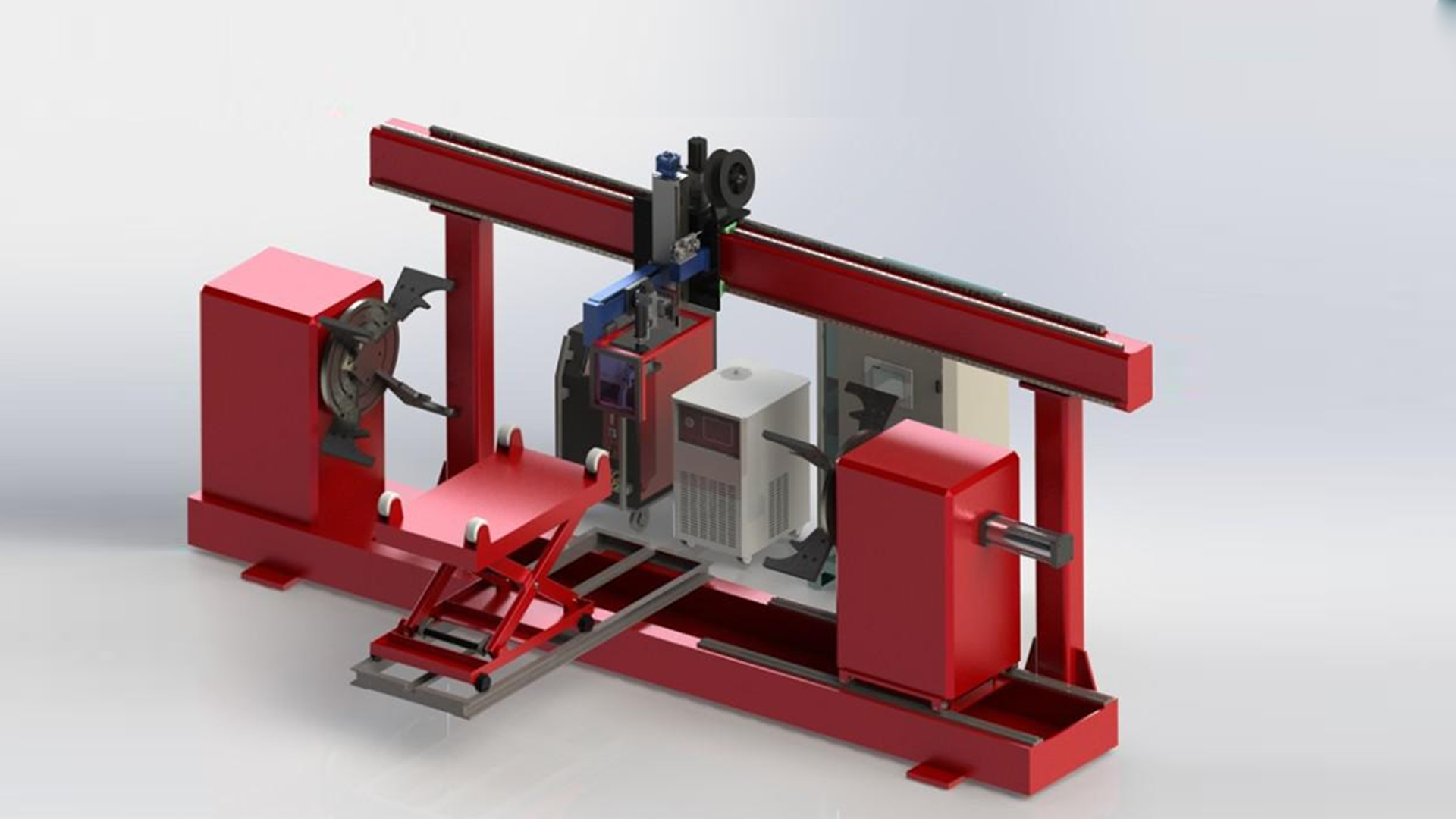
Welding is an important thermal processing method in modern manufacturing. To a large extent, the level of welding technology reflects a country’s industrial strength.
Today, welding robots are widely used in industrial production. They combine computer control, electronics, sensors, and intelligent systems into one integrated solution. As a result, they help improve welding quality, increase production efficiency, and reduce the need for manual labor in harsh environments.
However, a welding robot is not just a single machine. It is a complete system made up of several key components. Each part plays an important role in ensuring stable and accurate welding.
Let’s explore the main components of a welding robot system.
1. Robot Body: The Core Mechanical Structure
The robot body is the main mechanical part of the welding robot. It is usually a six-axis articulated robot driven by servo motors.
This part includes:
- Mechanical arm
- Joints
- Drive units
- Transmission mechanisms
- Built-in sensors
Its main function is to move the welding torch to the correct position and angle. It also ensures that the welding path is followed accurately.
Because of its six-axis design, the robot can move freely in three-dimensional space. The first three axes control position, while the last three axes control orientation.
This flexibility allows the robot to handle complex welding tasks with high precision.
In Juchuang welding automation systems, the robot body is designed for stable movement and high repeatability, helping manufacturers achieve consistent welding results.
2. Control System: The Brain of the Robot
The control system manages the operation of the welding robot.
It includes computer hardware, electronic components, and control software. This system sends commands to the robot body and ensures that it moves according to programmed instructions.
In simple terms, it controls:
- Motion paths
- Welding speed
- Start and stop timing
- Position accuracy
Because of this, the robot can repeat the same welding process with high precision.
In modern production, control systems also support multiple programs. This allows factories to switch between different products quickly.
For example, in a Juchuang application case, manufacturers use advanced control systems to adjust welding parameters easily, reducing setup time and improving production flexibility.
3. Power Source and Transmission System
The power system provides energy for the robot’s movement. Most welding robots use electric servo motors, although some systems may use hydraulic power.
The transmission system transfers this power to each joint of the robot. It ensures smooth motion and accurate positioning during operation.
A stable power and transmission system is essential for maintaining consistent performance, especially in continuous production environments.
Without reliable power delivery, the robot cannot perform precise welding tasks.
4. Welding Process System: The Core Working Unit
The welding process system is the part that actually performs the welding operation.
It includes several important components:
- Welding power source
- Wire feeding system
- Shielding gas supply system
- Welding torch
Each of these plays a key role in the welding process.
The power source controls the welding current and voltage. The wire feeder delivers welding wire smoothly. The gas system protects the weld area from contamination. The welding torch directs the arc to the workpiece.
In Juchuang welding solutions, these components are optimized to work together. This helps improve arc stability, reduce spatter, and enhance overall weld quality.
5. Peripheral Equipment: Supporting the System
In addition to the main components, welding robots require supporting equipment to operate effectively.
These may include:
- Positioners and fixtures
- Safety protection systems
- Cooling systems
- Sensors and monitoring devices
These peripherals help ensure safe operation, accurate positioning, and efficient production.
Without proper peripheral equipment, even a high-quality robot cannot perform at its best.
6. Six-Axis Structure and Its Importance
Most welding robots used today are six-axis articulated robots.
Each axis has a specific function:
- Axes 1–3 control the position of the robot arm
- Axes 4–6 control the orientation of the welding torch
This design allows the robot to reach different angles and positions easily.
As a result, it can handle both simple and complex welding tasks in various industries.
7. Juchuang Integrated Welding Robot Solutions in Practice
In real industrial applications, the performance of a welding robot depends on how well all components work together.
Based on Juchuang welding automation solutions, many factories have improved their production systems through integrated design.
For example, a manufacturing company using Juchuang welding systems faced problems such as inconsistent weld quality and unstable operation due to poor system coordination.
After upgrading to a complete Juchuang solution, including:
- High-precision robot body
- Advanced control system
- Optimized welding process equipment
- Coordinated peripheral devices
the factory achieved smoother production and better welding consistency.
In addition, maintenance became easier because all components were designed to work as a unified system.
This demonstrates that integration is just as important as individual components.
8. Conclusion
A welding robot system is made up of several key components, including the robot body, control system, power system, welding process equipment, and peripheral devices.
Each part plays a critical role in ensuring accurate, stable, and efficient welding performance.
When these components are properly integrated—such as in Juchuang welding automation solutions—the system can deliver high productivity, consistent quality, and reliable operation.
As industrial automation continues to grow, understanding the structure of welding robots will help manufacturers make better decisions and improve their production systems.


