
As industrial automation continues to grow, welding robots are now widely used in modern manufacturing. They help improve precision, speed, and consistency. However, one common challenge remains in every welding process—high-temperature welding slag and spatter.
If not handled properly, welding slag can reduce product quality, damage equipment, and slow down production. Therefore, understanding how to manage it is essential for stable and efficient operation.
1. Understanding Welding Slag in Robot Welding
During robotic welding, filler materials melt under high heat to join metal parts together. As the metal cools, leftover materials form solid particles known as welding slag.
In addition, tiny molten droplets may splash during the process. These are called welding spatter. Both slag and spatter are natural by-products of welding.
Although welding robots improve consistency, they do not completely eliminate slag formation. Instead, proper handling becomes even more important in automated production lines.
2. Why High-Temperature Slag Is a Problem
High-temperature welding slag may look small, but it can cause serious issues in industrial environments.
First, it affects product appearance. Slag sticking to the weld surface makes the final product rough and uneven. This often requires extra grinding or polishing, which increases labor and time costs.
Second, it increases safety risks. Hot slag and spatter can fly into surrounding areas. If flammable materials are nearby, it may lead to dangerous accidents.
Third, it can damage robotic systems. Welding robots rely on electrical cables, joints, and sensors. High-temperature slag can burn insulation layers or block moving parts, which leads to system failure or downtime.
Therefore, slag control is not optional—it is essential for safe and efficient production.
3. Main Causes of Welding Slag and Spatter
Understanding the causes helps improve control methods. In most robotic welding processes, slag and spatter are caused by:
· Improper welding parameters such as voltage, current, or speed
· Low-quality or incompatible welding materials
· Incorrect welding angle or torch position
· Unstable shielding gas flow
· High heat concentration in certain welding zones
Even with advanced welding robots, these factors still exist. That is why proper system setup and maintenance are very important.
4. Effective Methods to Handle Welding Robot Slag
To control high-temperature welding slag effectively, manufacturers usually combine multiple methods.
4.1 Optimize Welding Parameters
Adjusting voltage, current, and speed can significantly reduce spatter. A stable arc helps create cleaner welds and less residue.
4.2 Use Anti-Spatter Protection
Applying anti-spatter agents or coatings can prevent slag from sticking to the workpiece and welding nozzle. This reduces cleaning time and improves efficiency.
4.3 Install Protective Covers
Protective sleeves and covers for welding cables and robotic arms can prevent heat damage. These covers are designed to resist high temperatures while maintaining flexibility.
4.4 Regular Cleaning and Maintenance
Frequent cleaning of welding tips, nozzles, and surrounding areas is necessary. If slag builds up, it can block gas flow and reduce welding quality.
4.5 Safe Work Environment Design
Keep flammable materials away from welding areas. At the same time, use proper ventilation and fire protection systems to reduce risks.
5. Juchuang Welding Robot Solutions in Slag Control
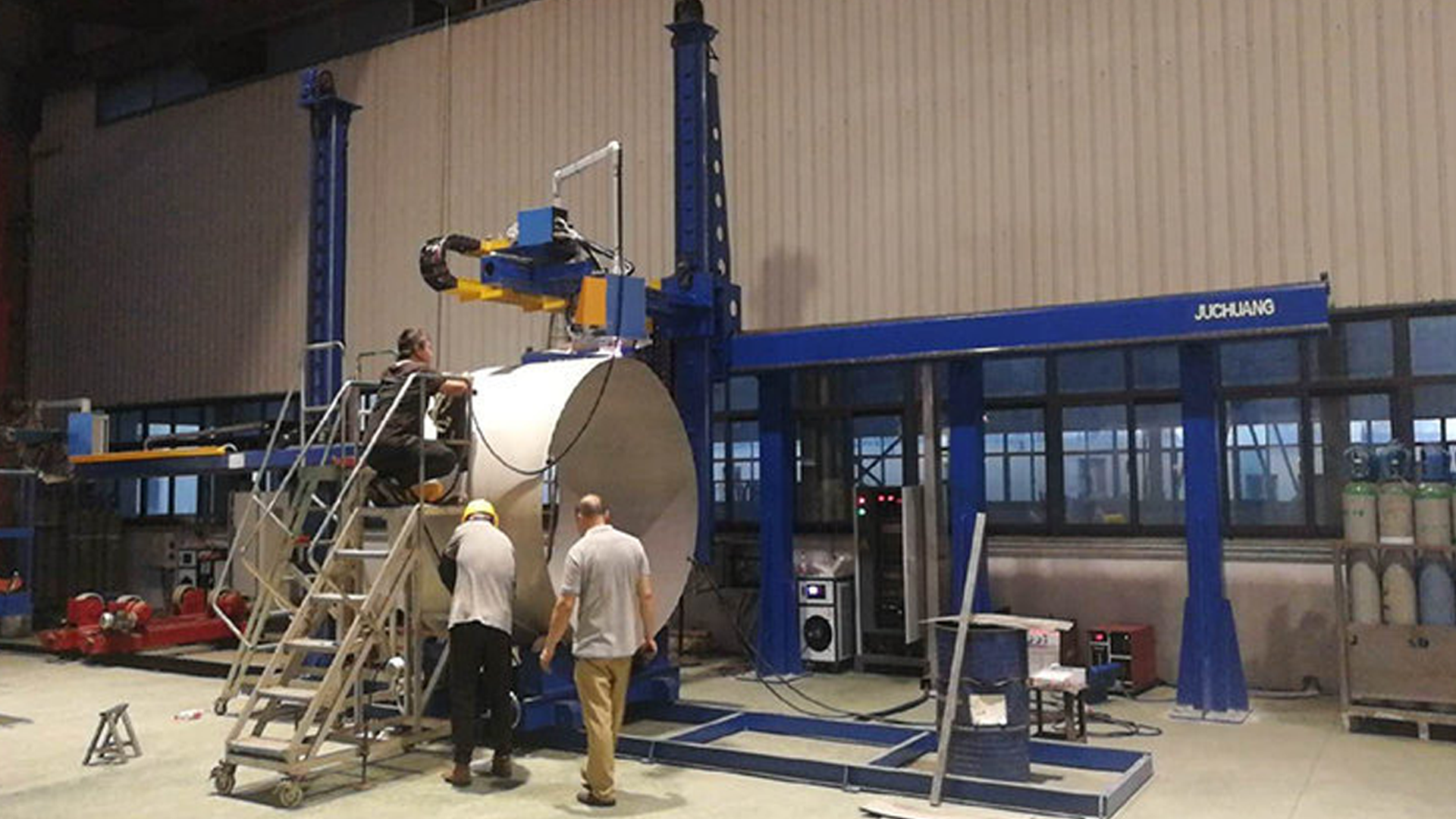
In real industrial applications, system-level solutions are often more effective than single methods. This is where Juchuang welding technology provides strong support.
Based on solutions from Juchuang Products, many manufacturers integrate complete welding protection systems to improve slag management and production stability.
For example, in a metal processing workshop using Juchuang welding automation systems, the company faced frequent downtime caused by spatter buildup on robotic arms and cable damage. After upgrading to Juchuang’s welding protection setup, including:
· High-temperature resistant protective sleeves
· Optimized welding parameter control systems
· Improved torch positioning stability
· Anti-spatter support solutions
the production line achieved more stable operation and reduced maintenance frequency.
As a result, cleaning time was significantly reduced, and equipment lifespan was extended. More importantly, welding consistency improved across mass production batches.
Such integrated solutions show that controlling welding slag is not just about cleaning—it is about system optimization.
6. Daily Maintenance Tips for Stable Welding Performance
To ensure long-term stable operation of welding robots, daily maintenance should not be ignored.
Here are some practical tips:
· Check welding nozzles and clean them regularly
· Inspect cables for heat damage or wear
· Monitor welding parameters during operation
· Replace worn consumables in time
· Keep the working area free of slag buildup
In addition, operators should receive proper training to handle basic troubleshooting. This helps prevent small issues from turning into major failures.
7. Conclusion
High-temperature welding slag is a common challenge in robotic welding systems. Although it cannot be completely avoided, it can be effectively controlled through proper management.
By optimizing welding parameters, using protective solutions, and applying integrated systems like those from Juchuang, manufacturers can significantly improve safety, reduce downtime, and enhance production efficiency.
In modern industrial automation, efficient slag handling is not just maintenance—it is a key part of stable and high-quality manufacturing.


