
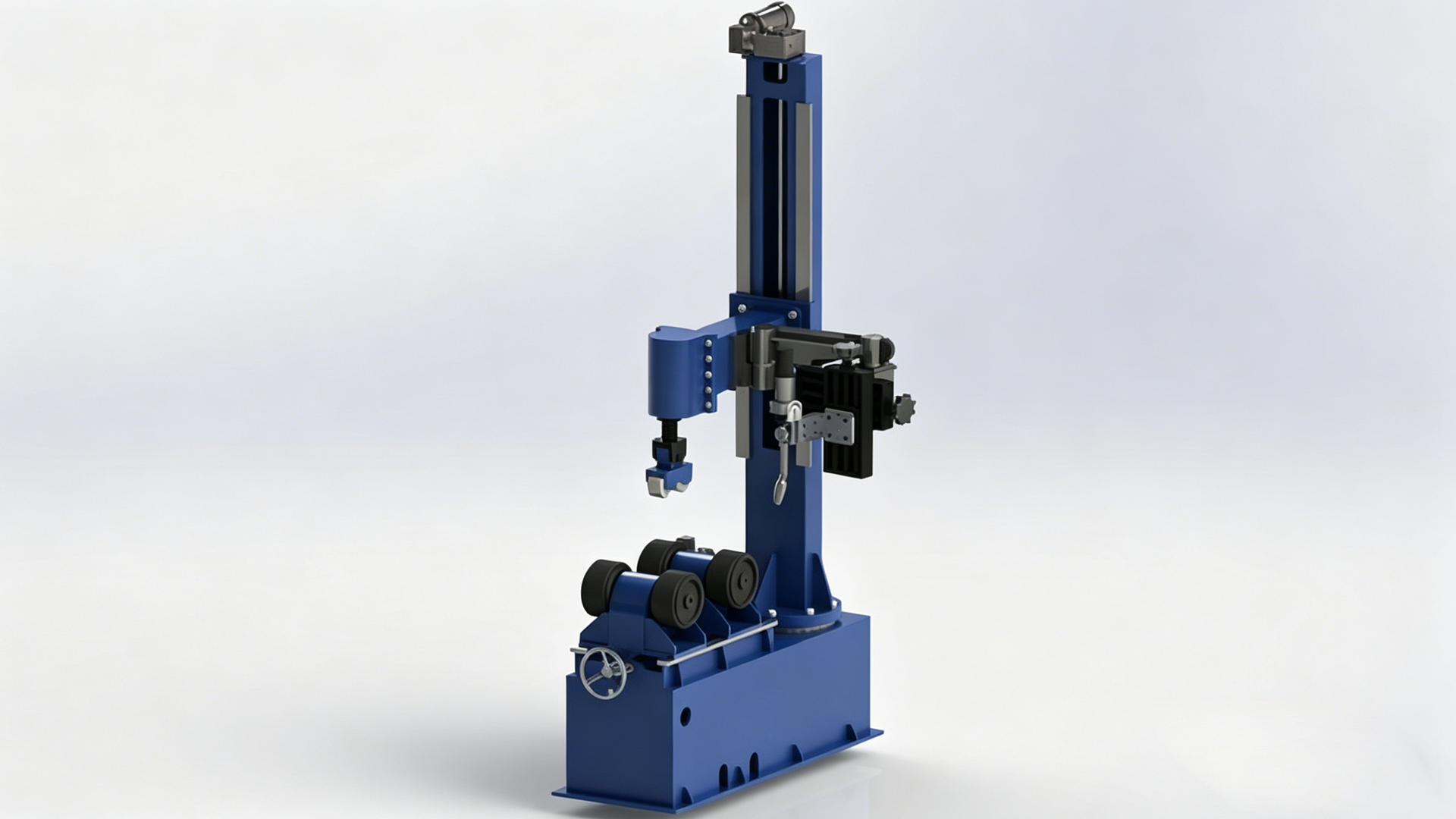
Welding robots are industrial robots used for welding, cutting, and spraying tasks. In recent years, with the rapid development of electronics, computer control, CNC systems, and robotics, welding automation has become more advanced and widely used.
Since the 1960s, when welding robots first entered production lines, the technology has matured significantly. Today, they are an essential part of modern manufacturing.
So, what are the real benefits of using welding robots in industrial production? Let’s take a closer look.
1. Welding Robots Improve Production Efficiency
One of the biggest advantages of welding robots is higher production speed.
A typical six-axis welding robot has fast response time and smooth motion control. Its welding speed can reach about 50–160 cm/min, which is much faster than manual welding, usually around 40–60 cm/min.
In addition, robots do not get tired. Once the system is running and basic power and gas supply are stable, production can continue without interruption. This allows factories to maintain long and stable production cycles.
Moreover, modern high-quality robots have stable performance. With proper maintenance, they can operate for many years with very low failure rates.
For example, in a metal fabrication project using Juchuang welding automation systems, a manufacturing client upgraded from manual welding to robotic welding lines. After implementation, production output increased significantly, and downtime caused by human fatigue was almost eliminated.
As a result, overall production efficiency improved in a very noticeable way.
2. Welding Robots Improve Product Quality
Another major benefit is stable and consistent weld quality.
During robotic welding, once welding parameters and motion paths are set, the robot repeats the same action with high precision. These parameters include:
· Welding current
· Welding voltage
· Welding speed
· Wire extension length
All of these directly affect weld quality. Because the robot keeps them constant, each weld is produced under the same conditions.
In contrast, manual welding is affected by human factors such as skill level, fatigue, and attention changes. This often leads to inconsistent weld quality.
Therefore, welding robots greatly reduce human error. At the same time, they lower the skill requirement for operators, since the process is controlled by programming rather than manual control.
For example, a Juchuang-based welding solution used in a structural steel factory helped the company achieve more stable weld seams across large batch production. The consistency of weld quality improved, and product rejection rates were significantly reduced.
3. Welding Robots Shorten Product Changeover Time and Reduce Equipment Investment Pressure
Another important advantage is flexibility.
Welding robots are different from dedicated welding machines. They can adapt to different workpieces and production tasks more easily.
When product designs change, manufacturers can adjust the robot system by:
· Updating welding programs
· Replacing or redesigning fixtures
· Adjusting welding paths
In many cases, there is no need for large-scale equipment replacement. This helps reduce long-term investment costs.
In addition, welding robots support small-batch and multi-variety production. This is very important for modern factories that often need to switch between different product models.
For instance, in a Juchuang automation application case, a manufacturer producing multiple metal components used the same robotic welding platform for different product lines. By simply changing fixtures and programs, the factory quickly switched production tasks without purchasing new machines.
As a result, the company reduced equipment investment pressure while improving production flexibility.
4. Welding Robots Support Smarter and More Stable Manufacturing
Beyond efficiency and quality, welding robots also bring better production control.
Since robot operation is based on fixed programs, production cycles become predictable. This makes it easier for factory managers to plan output and schedule orders.
In addition, modern welding systems often include monitoring functions that track welding conditions in real time. This helps detect problems early and reduce production risks.
With Juchuang welding systems, manufacturers can integrate stable control units and automated welding processes, helping them build more organized and efficient production lines.
5. Juchuang Welding Robot Solutions in Real Industry Use
In real production environments, welding robots perform best when supported by complete system solutions.
Based on Juchuang welding equipment and automation systems, many companies have successfully upgraded their production lines.
For example, a heavy equipment manufacturer faced challenges such as unstable welding quality, slow production speed, and frequent rework when using manual welding.
After adopting a Juchuang robotic welding solution, the factory introduced:
· Six-axis welding robot system
· Stable welding parameter control
· Flexible fixture adjustment system
· Standardized production workflow
The results were clear. Production efficiency increased, weld consistency improved, and product changeover became faster and easier.
At the same time, workers were moved away from high-intensity manual welding tasks to safer and more comfortable positions.
This case shows that welding robots are not just tools for automation—they are key systems for modern industrial transformation.
6. Conclusion
Welding robots bring many clear advantages to modern manufacturing.
They improve production efficiency, ensure stable and consistent weld quality, and provide flexible production capabilities. In addition, they help reduce long-term equipment investment pressure and support faster product changeovers.
When combined with integrated solutions like those from Juchuang, welding robots become even more powerful and reliable in real industrial applications.
As manufacturing continues to develop, welding robots will play an even more important role in building efficient, flexible, and high-quality production systems.


